


Why Choose Us
Competitive Price
We are committed to providing our customers with the best quality products and services at competitive prices.
Quality Control
We have a strict quality control system to ensure that our products meet the highest standards of quality.
After-Sale Service
Our personnel are generally within the spirit of continuous improvement and excellence, and using the excellent top quality goods, favorable rate and superior after-sales expert services, we try to win every customer's believe in for Usb C Cable Data Transfer.
24H Online Service
If you have difficulties when using the product, we will respond to your needs as soon as possible and give you the greatest support.
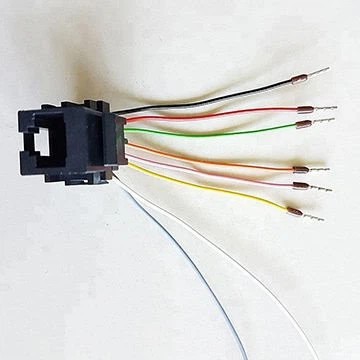


What is Wire-Harness
A wire harness, also known as a wiring harness, cable harness, or wiring assembly, is a group of wires or cables that are bundled together, typically with cable ties, and routed through a protective sheath or covering. Wire harnesses are used in a variety of electrical systems, both in vehicles and in industrial applications, to ensure that wires are properly organized, protected, and connected. They are used to simplify the electrical system, reduce installation time, and improve reliability by protecting the wires from damage, corrosion, and mechanical stresses that can cause failure.
Reliability: Wire harnesses are composed of multiple wires held together by insulation and tied together in a specific way that reduces the risk of wires becoming loose or disconnected. This ensures that the electrical connections inside a wire harness remain stable, consistent and reliable.
Durability: Wire harnesses are capable of withstanding harsh environments, including exposure to extreme temperatures, high vibrations, moisture and chemicals. This makes them appropriate for industries such as automotive, aerospace and military, where wires must be capable of withstanding similar environmental challenges.
Cost-effective
Wire harnesses are often pre-manufactured and customized to meet the specific needs of the end-user. This saves time and labor costs in installation, repair and maintenance.
Easier Installation
With wires already organized and connected in the harness, there is reduced labor to install, saving time in the manufacturing process.
Improved Safety
The use of wire harnesses reduces the risk of loose wires, electrical fires, and other hazards. This helps improve the overall safety of the equipment or vehicle.
Five Differences Between a Wire Harness and a Cable Assembly
The terms wire harness and cable assembly are often used interchangeably, but they are not the same. Instead, they have definite differences. In this article, I will discuss five main differences between a wire harness and a cable assembly.
Before starting with those differences, I want to define a wire and a cable. A wire is a single strand of an electrical conductor, typically copper, aluminum, or something steel. A cable is a bundle of wires with two or more insulated wires wrapped in one jacket. Most cables contain a positive wire, a neutral wire, and a grounding wire.
Five key differences between a wire harness and a cable assembly
- Each is utilized in various environments. Wire harnesses provide minimal protection for wires. Its purpose is to organize wires and cables efficiently. It cannot shield them from extreme temperatures or friction between one another. They are fundamentally used for indoor use.
- Cable assemblies guard all the products safe in the most extreme conditions and are ideal for outdoor use. It's a high-level resistance to outside variables such as heat, dust, and moisture. It also protects the wire and cables from friction and corrosion.
- Wire harnesses are a low-cost electrical solution that best keeps electric cables and wires organized. By bundling these wires and cables together, engineers can keep their wiring systems organized. It doesn't concentrate on giving added protection to its wires and cables and usually requires less material and effort. Thus, it costs less compared to the cable assembly. Although cost-friendly, it still relies on the type, number, and quality of cables, wires, or connectors used in the production.
- However, the cost of the cable assembly is satisfactory because of the added protection it provides. Cable assemblies offer more vigorous protection by keeping components snug within a rugged outer sheath. In addition, cable assemblies are intended to be utilized in demanding environments where things like heat, friction, or moisture could untimely wear out a cable or wire.
The essential difference between a wire harness and a cable assembly is their physical attributes and function. A wire harness offers a cover that encases single cables, usually from the same material utilized in a cable assembly. One can see and remove an individual cable from a wire harness. In comparison, a cable assembly has multiple wires but is bundled together by a single external sleeve. It comes as a only one thick wire.
- Many of our everyday household products and tools use wire harnesses. These products are computers, televisions, monitors, microwaves, and refrigerators. These products use wire harnesses rather than of cable assemblies because these products come with a protective shell, which removes the requirement for added protection. Wire harnesses are also present in most automobiles and airplanes.
- Cable assemblies are used for severe environmental conditions or extreme temperature changes. In addition, many heavy industries such as medical, military, aerospace, and construction generally use cable assemblies in their manufacturing processes. They need the cable assembly to protect areas such as the electric flow in its wires or cables. They are the perfect for high-speed data transfers.
- To protect outside factors from harm caused by the flow of electricity.
- To ensure wiring systems are organized and straightforward for technicians to understand.
- To protect outside factors from harm caused by the flow of electricity.
- To ensure wiring systems are organized and straightforward for technicians to understand.
- To protect the wiring or cable against wear and tear or other harsh environmental conditions.
What are the types of wire harnesses and what are their functions?


Medical wiring harness
Medical wiring harness is the line of medical electronic equipment, it can be said that there is no wiring harness medical electronic equipment can not run normally. Medical wiring harness is cut by the electronic wire according to the drawing of the appropriate length, and then punched with copper into the contact parts of the terminals (connectors) and wire and cable crimping, and then outside the molded pressure insulator or additional metal shells, etc., to the wire harness bundled to form a connection to the circuit components.
Automotive wiring harness
Automotive wiring harness is the main body of the network of automotive circuit copy, there is no wiring harness there is no automotive circuit. Wiring harness refers to the copper punching and made of contact terminals (connectors) and wire and cable crimping, and then outside the plastic pressure insulator or additional metal shell, etc., to wire harness bundled to form a connected circuit components. Harness industry chain, including wire and cable attack, connectors, processing equipment, harness manufacturing and downstream application industry, harness applications are very wide, can be used in automobiles, household appliances, computers and communications equipment, a variety of electronic instrumentation, etc., the body harness connects the entire body, the general shape of the H-shaped.
Automation harness
Automation harness refers to machinery and equipment, systems or processes (production, management processes) in the absence of people or fewer people directly involved, in accordance with human requirements, after automatic detection, information processing, analysis and judgment, manipulation and control of the wiring harness made. The combination of the two to create a highly efficient output to meet the needs of suppliers.
Fire-fighting robot harnesses
Firefighting robot wiring harness, including a wire core, a slide groove, a rotating shaft, and an elastic band. The firefighting robot wiring harness is set with an elastic band, which simplifies the use of the wiring harness and increases the service life of the wiring harness through the use of the elastic band.
D-USB injection molding transmission signal harness
D-USB injection molding transmission signal harness is the harness used to transmit information and signals. Signal line has two, to the difference between the two most input, the reason for doing so is the anti-interference ability, think about it, if a separate line to transmit data, if the external electromagnetic interference is very strong, then the signal waveform will cause distortion, and two lines at the same time to transmit the words by the interference together with the distortion, but the difference is unchanged, this is the principle!
DVI signal harness
DVI is based on TMDS conversion minimum differential signal) technology to transmit digital signals, TMDS using advanced coding algorithms to 8bit data (R, G, B in each road color signals) through the minimum conversion coding for 10bit data (including line-field synchronization information, clock information, data DE, error correction, etc.), after DC balanced, the use of differential signals to transmit the data, which, compared with LVDS, TTL, have better performance. Compared with LVDS and TTL, it has better EMC performance and can realize long distance and high quality digital signal transmission with low cost special cable.
Applications of Wire-Harness
Wire harnesses have a wide range of applications across various industries. Some of the most common applications of wire harnesses are:
Automotive industry Wire harnesses are extensively used in automobiles for connecting various electrical and electronic components such as engine control units, sensors, lights, and entertainment systems, among others.
Aerospace industry Wire harnesses are crucial in the aerospace industry for interconnecting avionics equipment in aircraft, spacecraft, and other vehicles.
Medical industry Wire harnesses are used in medical equipment such as MRI machines, X-ray machines, and other diagnostic instruments for interconnecting various electrical and electronic components.
Electronics industry Wire harnesses are used extensively in consumer electronics such as mobile phones, televisions, and computers for interconnecting various components within the device.
Industrial machinery industry Wire harnesses are used for interconnecting electrical and electronic components in industrial machinery such as cranes, conveyor systems, and hydraulic systems, among others.
Defense industry Wire harnesses are used in defense equipment such as fighter jets, tanks, and missile systems, among others, for interconnecting various electrical and electronic components.
Wire-Harness Features
Customization: A wire harness can be customized for specific applications and configurations, providing tailored solutions for different requirements.
Protection: Wire harnesses are designed to protect delicate wires and cables inside a tough outer sleeve, shielding them from mechanical damage, abrasion, and chemicals.
Organization: Wires and cables are typically grouped together and organized according to a specific routing plan, which makes assembly and maintenance easier and faster.
Easy installation: The pre-built wire harnesses are easy to install, helping to reduce assembly time, labor costs and potential for error.
Durability: A wire harness can withstand harsh environments, extreme temperatures, and vibrations, ensuring long-term reliability and sustainability.
Connectors: Wire harnesses use connectors and terminals that provide reliable and secure connections, reducing the risk of electrical failures and improving safety.
Flexibility: Wire harnesses can be designed to be flexible, allowing them to bend and twist without damaging the wires inside, making them ideal for applications that require constant movement.

The manufacturing process of a wire harness can range anywhere from simple to complex. The design process takes place first. During the design creation, custom features will be added to suit the preferences of the intended application. The next step has 3 tasks:
Stripped: The wires are stripped either by hand or with our automated stripping equipment.
Terminating: Metal terminals are attached to the ends of the wires. A piece of special machinery or tool is used to do this called the crimp centre
Then, the wires will be inserted into a piece of equipment called the connector housing. In this step, the Male and Female parts of the wires will be connected. Some will be connected to the connector housing, while others will be left to be connected to the main equipment. As the last step, the wires will be bound by an external protective covering and then are taken for final testing. The entire manufacturing process is often done manually because it is very delicate and cannot be done with complete automation.
The Benefits of Using Wire Harnesses
Wire harnesses help in keeping the wires organized and they provide a significant degree of protection. In most demanding environments, wire harnesses can be used to offer the desired level of protection to the bunch of cables and wires. The following are a range of benefits that wire harnesses have to offer:
- They optimize space by bounding the wires together.
- Improve aesthetics of a complete assembly.
- They can be customized to suit the specific industrial application needs.
- Cables and wires enjoy an extended life and durability due to wire harnesses.
- Wire harnesses enhance the safety quotient of various equipment and appliances.
- They are available in a variety of sizes, lengths, and also prices.

Maintenance Tips for Wire-Harness
Regular inspection
It's important to visually inspect wire-harnesses regularly for any signs of wear and damage, such as frayed wires, cracks, or loose connections. This can help detect and prevent potential problems before they occur.
Keep it clean
Dirt, debris, and corrosion can damage wire-harnesses over time. Keeping them clean and dry will help prolong their lifespan. Use compressed air or a gentle brush to remove any dirt or debris, and wipe down with a cloth if needed.
Secure it properly
Wire-harnesses can become loose or move around during operation, which can cause damage and result in malfunctions. Ensure that the harness is properly secured in place, and use ties or clamps as needed to keep it in place.
Protect from heat and friction
Excessive heat and friction can damage the wires in the harness. Make sure the harness is routed away from high-heat sources, and use protective sleeves or conduit to shield it from friction.
Our Factory
We are a professional manufacturer of designing, producing, and selling a wide range of 3C productions, mainly the qualified cables, wire harnesses and other assemblies. Applications include automotive, new energy, commercial, medical, data transmission, computer, and mobile phone. We have advanced automated production equipment, efficient production capacity, perfect management system, quality products and service capabilities. We have got the certificates of ISO9001, TS16949 and UL. Welcome all the customers across the world to discuss business cooperation opportunity.

FAQ
We're professional wire harness manufacturers and suppliers in China, specialized in providing high quality customized products. We warmly welcome you to wholesale discount wire harness in stock here and get pricelist from our factory. For price consultation, contact us.
hdmi to mini hdmi converter, usb to coaxial cable, mobile to hdmi cable